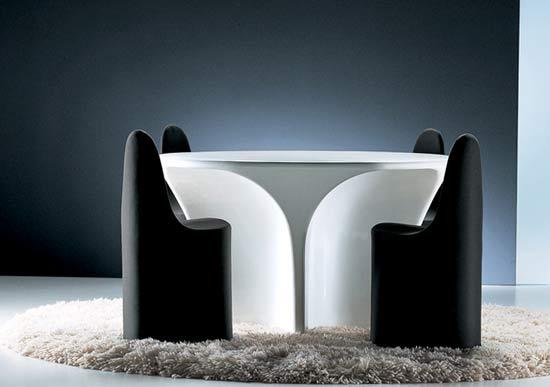
Sunday, 8 December 2013

Context that Changed Design - Entry #21


“Streamlining ……”


Streamlining refers to rounded, smoothly finished and generally tear-drop shaped forms.  Streamlined forms were used for the first time at the beginning of the 20th century and were associated with transport technologies (for example ships, aircraft and motor cars).  Streamlining had a function at that time.  It improved the performance of transport when moving at high speeds, so in a way, streamlining reflected speed.


Later on, in the 1930s, streamlining was used to make household goods look smoother and shinier – to attract customers.  The economy in America was not so good at that time and so manufacturers were struggling to keep operating because there was an uncontrollable competition within the market.  In view of this, manufacturers had to come up with ideas to keep their business going – to increase sales and make a profit, despite the economic problems.


Instead of manufacturing new products, many employers in the manufacturing industries decided to give a new look to their existing products.  What they did was that they employed designers to use Streamlining and give a different style to their existing products – a style which was also different from that of other competitors’ products.  To increase sales, they re-styled their products annually.  Refrigerators, vacuum cleaners, radios, cameras and telephones were amongst the household products which were re-styled, using streamlining.


Raymond Loewy, Norman Bel Geddes, Henry Dreyfuss and Walter Dorwin Teague were some of the American designers who produced streamlined designs and gave sleek modern looks to a variety of consumer goods, such as those I mentioned above.


Jetset, (2000), Styled by Raymond Loewy... Designed and built by Dorset [ONLINE].
 [Accessed 08 December 13]


Raymond Loewy`s Greyhound Bus (1940)
Jetset, (2000), Greyhound Bus, 1940 [ONLINE].
Available at: http://jetsetmodern.com/images2/loewybus.jpg
[Accessed 08 December 13]


The casing of the Locomotive #3768 was designed by Raymond Loewy in February 1936.

 File:PRR K4s 3768.jpg
 Wikipedia, (2013), #3768 in Raymond Loewy casing [ONLINE].
 Available at: http://upload.wikimedia.org/wikipedia/commons/thumb/8/81/PRR_K4s_3768.jpg/798px-PRR_K4s_3768.jpg
[Accessed 08 December 13]


Raymond Loewy’s Streamlined pencil sharpener (1933)
 IndD 501 Industrial Design Studio Intensive I, (2012), pencil sharpener [ONLINE]. Available at: http://industrial.design.iastate.edu/501/files/2012/08/raymond_loewy_pencil_sharpener.jpg
[Accessed 08 December 13]


Norman Bel Geddes
Ransom Center exhibit features streamline designs of Norman Bel Geddes photo
Jeanne Claire van Ryzin, (2013), Norman Bel Geddes with blueprints. [ONLINE]. Available at: http://media.cmgdigital.com/shared/lt/lt_cache/thumbnail/188/img/photos/2012/09/25/c2/85/AAS_092212_design3_1571445a_1.jpg [Accessed 08 December 13]
 
 
Ransom Center exhibit features streamline designs of Norman Bel Geddes photo
Jeanne Claire van Ryzin, (2013), Norman Bel Geddes, 'Motor Car No. 9 (without tail fin),' 1933 [ONLINE].
Available at: http://media.cmgdigital.com/shared/lt/lt_cache/thumbnail/188/img/photos/2012/09/25/f3/7e/AAS_092212_design1_1571443a_1.jpg [Accessed 08 December 13]


Oriole stove by Norman Bel Geddes


 front
studyblue, (2013), Oriole stove [ONLINE].
 Available at: http://classconnection.s3.amazonaws.com/552/flashcards/505552/png/picture_59.png
[Accessed 08 December 13]


Henry Dreyfuss
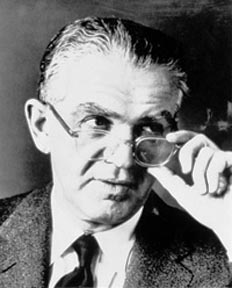
Henry Dreyfuss
 NNDB, (2013), Henry Dreyfuss [ONLINE].
 Available at: http://www.nndb.com/people/793/000097502/henrydreyfuss02.jpg
 [Accessed 08 December 13]
 
 
Streamline Iron by Henry Dreyfuss
Daily Icon, (2008), Icon: Streamline Iron by Henry Dreyfuss [ONLINE]. Available at: http://www.dailyicon.net/magazine/wp-content/uploads/2008/09/iron01dailyicon.jpg
[Accessed 08 December 13]


Dieselpunks, (2011), NYCS J-3a streamlined by Henry Dreyfuss [ONLINE].
 [Accessed 08 December 13]


New York Central introduced 10 new streamliner steam engines and cars designed by Henry Dreyfuss for its Twentieth Century Limited New-York-Chicago run (1938)
Daily Icon, (2008), streamliner steam engine [ONLINE]. Available at: http://www.dailyicon.net/magazine/wp-content/uploads/2008/09/iron02dailyicon.jpg
 [Accessed 08 December 13]

Dieselpunks, (2011), First trip of the new streamlined Empire State Express [ONLINE].
I10eJjQ7rFCw4mrewHJ7eOPR67Z9gcs*DKiFDuLULItbre10V/20Empire_Express_Streamlined_1941.jpg
 [Accessed 08 December 13]


Walter Dorwin Teague
 
 Russell Flinchum, (2010), Why Teague Matters [ONLINE]. Available at: http://dcrit.sva.edu/view/readingroom/why-teague-matters/attachment/teague_portrait-1/
 [Accessed 08 December 13]


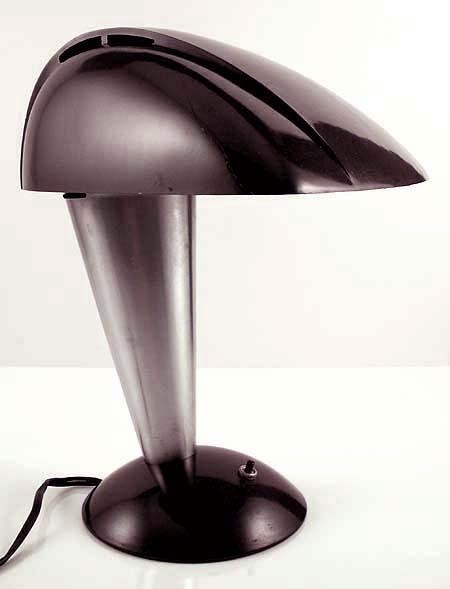
 Polaroid Streamlined Lamp designed by Walter Dorwin Teague (1937)
1937 Polaroid Streamlined Lamp designed by the firm of Walter Dorwin Teague
BFA, (2013), 1937 Polaroid Streamlined Lamp designed by the firm of Walter Dorwin Teague [ONLINE].
Available at: http://www.berkshirefinearts.com/uploadedImages/articles/892_748-Memorial-Drive443588.jpg
 [Accessed 08 December 13]


Walter Teague streamliner rendering
Daniel Strohl , (2010), Walter Teague streamliner rendering [ONLINE].
Available at: http://blog.hemmings.com/wp-content/uploads//2010/05/WalterTeaguestreamliner_1000.jpg
 [Accessed 08 December 13]


Earlier on, when I was writing about Art Deco, I mentioned the thermoset plastic Bakelite.  In Streamlining, Bakelite was very suitable for the moulding and for the making of the household products’ casings.
 
 
 Ebay, (2013), Bakalite [ONLINE].
[Accessed 08 December 13]


In 1934 Raymond Loewy streamlined a refrigerator “Coldspot” for Sears and this was the first household appliance that was noticed on the market for its looks, not for its functionality! 
 

On 31st October 1949 Loewy was the first designer to appear on the Time magazine because by that time Streamlining had become very popular and the designers who practised it became very well-known.  Loewy’s picture on the Time magazine cover was accompanied by a caption that said, “He streamlined the sales curve.” 


 Here is Raymond Loewy on the cover of time. It said that the mustache was influenced by Walt Disney, Photo Crowbar StudiosĀ 
Smartt Inc., (2013), Here is Raymond Loewy on the cover of time. It said that the mustache [ONLINE].
 Available at: http://www.smarttinc.com/email/NL-0113/dyk-0113-05.jpg
[Accessed 08 December 13]


So, Streamlining was very important to the American manufacturing industries, especially between the 1930 and the 1950, because it helped them to retrieve strength and become profitable again.


Jack5758. (2009). Streamlined Design . [Online Video]. 04 August.
 [Accessed: 08 December 2013]


Other References:
 

 IndD 501 Industrial Design Studio Intensive I. 2012. Raymond Loewy.
 [Accessed 08 December 13]


 Jetset. 2000. Feature Article. [ONLINE] Available at: http://jetsetmodern.com/loewy.htm.
 [Accessed 08 December 13]


Jeanne Claire van Ryzin. 2013. Ransom Center exhibit features streamline designs of Norman Bel Geddes. [ONLINE] Available at: http://www.statesman.com/news/lifestyles/ransom-center-exhibit-features-streamline-design-1/nSLJ3/. [Accessed 08 December 13]


Cook's Catalogue History, design, music and culture.. 2010. Film of Futurama Exhibit Shows Bel Geddes Model of 1960 America . [ONLINE] Available at: http://cookscatalogue.wordpress.com/2010/07/11/to-new-horizons-1940/.
 [Accessed 08 December 13]


Daily Icon. 2008. Icon: Streamline Iron by Henry Dreyfuss. [ONLINE]
Available at: http://www.dailyicon.net/2008/09/icon-streamline-iron-by-henry-dreyfuss/.
 [Accessed 08 December 13]


Dieselpunks. 2011. Sunday Streamline #29: Dreyfuss Rockets. [ONLINE]
Available at: http://www.dieselpunks.org/profiles/blogs/sunday-streamline-29-dreyfuss.
 [Accessed 08 December 13]


Daniel Strohl . 2010. Streamlining, it’s all the rage. [ONLINE]
Available at: http://blog.hemmings.com/index.php/2010/05/10/streamlining-its-all-the-rage/.

[Accessed 08 December 13]


Book: Fiell, C.F and P.F, 1999. Design of the 20th Century. 2nd ed. Germany: Taschen


Tuesday, 3 December 2013

Context that Changed Design - Entry #20


“The Modern Movement ……”


So far I have written about several art movements, different design styles and designers - starting from the Arts and Crafts Movement up to the Organic Design - and in my writings I have often referred to the Modern Movement or mentioned Modernism. 


But what exactly was the Modern Movement?


Today I am going to touch on those movements and styles (that I have already included in my Blog) that are associated with the Modern Movement.


The Modern Movement in Design was actually initiated in the mid-19th century by certain designers who wanted to reform their society by introducing a new approach to design.  Such designers include John Ruskin and William Morris.  As I explained earlier on, Morris was against the industrial production during the Victorian era.  He favoured handcraftsmanship and he practiced what he advocated.  The reforming ideas of Morris – mainly the simplicity, suitability, practicality and the good quality of the products, as well as his suggestion that design could be used as a tool to bring about good social changes – had a very important impact on the early origins of the Modern Movement.  Then, as I have mentioned before, several craft-based guilds and workshops, especially in Britain, Germany and America, were founded because they were encouraged by the ideas of Morris.


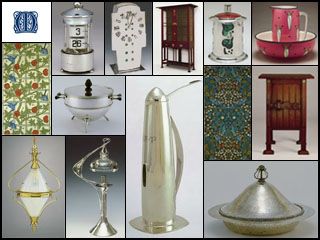
Mia Minneapolis Institute of Arts, (2013), British Arts and Crafts [ONLINE].
[Accessed 03 December 13]


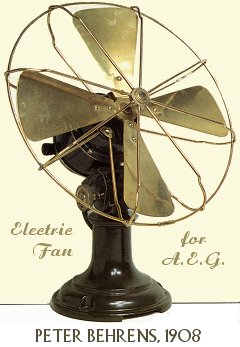
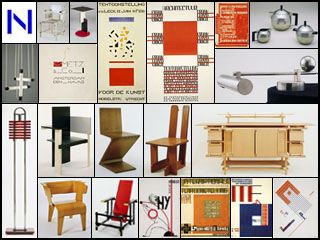
Gradually it was understood that industrial production was important too in order for the reforming ideas to be realized.  This was the time when the Deutscher Werkbund was founded in 1907 – a foundation that stressed on functionality.  By getting rid of the unnecessary decorations the Deutscher Werkbund developed greater efficiency when it came to the production and to the material used, and this brought about benefits both to the user and the producer.  This was the modern approach to design.  The elimination of decoration was also recommended by De Stijl (in fact, when I wrote about De Stijl, I mentioned that the works were extremely simple) while the Constructivists and Futurists praised machine work and industrial production.  Even Walter Gropius, who founded the Bauhaus in 1919, realized that Modernism was essential, after the wreck left behind by the First World War.  Gropius put into practice the reforming ideals of those who initiated Modernism.  And so, in the 20th century, Bauhaus which promoted functionalism, industrial production techniques and state-of-the-art materials became associated with Modernism.


The Art History Archive, (2013), Peter Behrens, 1908 [ONLINE].
 [Accessed 03 December 13]


Mia Minneapolis Institute of Arts, (2013), De Stijl [ONLINE].
 [Accessed 03 December 13]


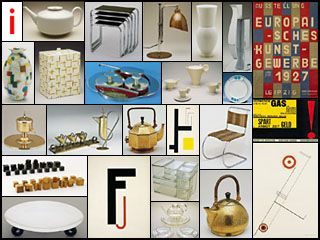
Mia Minneapolis Institute of Arts, (2013), Bauhaus [ONLINE].
 [Accessed 03 December 13]


By 1927 the International Style of Modernism had already developed and Le Corbusier played an important role in promoting this new approach to design, even though his designs were much less practical than those produced at the Bauhaus.  However, modernism almost came to an end when the Industrial Style promoters started going to extremes and distorting the social aims of Modernism.


architectures, (2013), A Crisis, For Real [ONLINE].
[Accessed 03 December 13]


Thanks to Alvar Aalto and other Scandinavian designers, a humanizing form of Modernism was initiated – the Organic Design – which inspired a new generation of Modern Movement designers, including Charles Eames that I mentioned  recently.
BLOUIN ARTINFO, (2010), Alvar Aalto's Modernist Throne, Reimagined [ONLINE].
 [Accessed 03 December 13]


Other References:


Mia Minneapolis Institute of Art. 2013. British Arts and Crafts. [ONLINE]

 [Accessed 03 December 13]


 Book: Fiell, C.F and P.F, 1999. Design of the 20th Century. 2nd ed. Germany: Taschen


Sunday, 1 December 2013

Context that Changed Design - Entry #19


“More about the Organic Design

after the 1960’s ……”


In the 1960s and 1970s, there were designers who were inspired by the Organic Design.  These included Maurice Calka, Pierre Paulin and Olivier Mourgue.  They expressed themselves by creating great sculptural forms in the organic style.


A  Rare Boomerang Desk by Maurice Calka for Leleu-Deshays
cribcandy, (2012), A Rare Boomerang Desk by Maurice Calka for Leleu-Deshays [ONLINE].
[Accessed 01 December 13]


The iconic Tulip Chair by Pierre Paulin for KE-ZU stockist Artifort
KE-UZ Blog, (2011), Time to Take Off … [ONLINE].
[Accessed 01 December 13]


Iconic 'Djinn' sofa  designed by Olivier Mourgue (c.1965)
 Iconic 'Djinn' sofa by Olivier Mourgue
Design Radar, (2013), Iconic 'Djinn' sofa by Olivier Mourgue [ONLINE].
[Accessed 01 December 13]


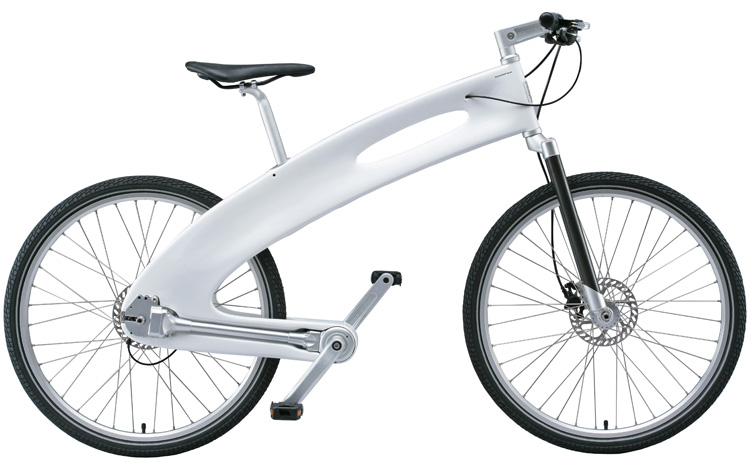
By the early 1990s, industrial designers, such as Ross Lovegrove, wanted to develop the Organic Design by using modern materials and techniques, just like Eames and Saarinen had done before.  However this time, Organic Design appeared stronger than before since there had been great advancement in technology which included computer-aided design and manufacture (usually referred to as CAD and CAM).  Organic designs in this era revealed the use of new industrial techniques and state-of-the-art materials.


Landscape Collection for Frighetto (1998) 
Architonic, (2013), Landscape by Frighetto [ONLINE]. Available at: http://image.architonic.com/img_pfm2-2/200/3881/frighetto_103_b.jpg
[Accessed 01 December 13]


Ross Lovegrove's New Bike for Biomega

Co. Design, (2013), First Look: Ross Lovegrove's New Bike for Biomega An exclusive sneak peek at two beautiful new bikes [ONLINE]. Available at: http://images.fastcompany.com/upload/LovegroveBike.jpg
 [Accessed 01 December 13]


 The Egg Chair designed by Arne Jacobsen
 www.getyourhomestuff.com: Decoration, (2010), The Egg Chair – Elegant design for reception areas [ONLINE]. Available at: http://www.getyourhomestuff.com/wordpress1/wp-content/uploads/2010/08/Arne_Jacobsen_The_Egg_Chair_01.jpg
[Accessed 01 December 13]


arne%20jacobsen%20mid century%20modern%20lounge%20furniture%20swan%20chair Arne Jacobsen Mid Century Swan Chair Celebrates 50th Anniversary
Furniture Fashion, (2010), Arne Jacobsen Mid-Century “Swan Chair” Celebrates 50th Anniversary [ONLINE]. Available at: http://www.furniturefashion.com/images/arne%20jacobsen%20mid-century%20modern%20lounge%20furniture%20swan%20chair.jpg
[Accessed 01 December 13]


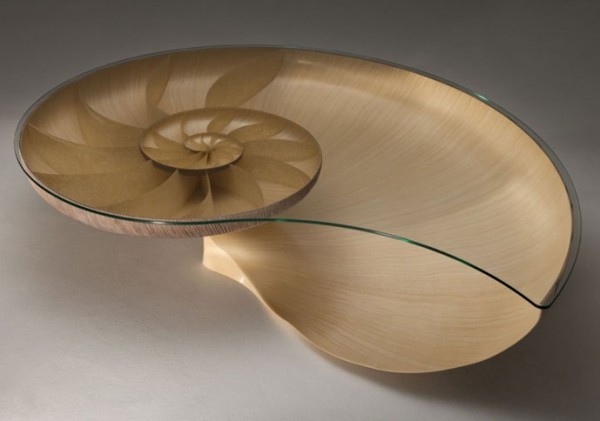
The Nautilus II Coffee Table
(the 2nd edition of the award-winning Nautilus Coffee Table)
This impressive piece of furniture reveals the beautiful shape of the spiral within the Nautilus shell.
Nautilus Table second edition by Marc Fish 01 600x421 Organic Inspired Furniture Design: Nautilus II Coffee Table
designer , (2012), Organic-Inspired Furniture Design: Nautilus II Coffee Table [ONLINE].
[Accessed 01 December 13]


Ironically, although Organic Design is related to natural materials, the materials which are best suited to express the spirit of nature and to create organic forms that comply with human forms, are plastics!


Other References:


 KE-UZ Blog. 2011. Time to Take Off …. [ONLINE]
[Accessed 01 December 13]
 
Co. Design. 2013. First Look: Ross Lovegrove's New Bike for Biomega An exclusive sneak peek at two beautiful new bikes. [ONLINE] Available at: http://www.fastcodesign.com/1662150/first-look-ross-lovegroves-new-bike-for-biomega. [Accessed 01 December 13]
 
www.getyourhomestuff.com: Decoration. 2010. The Egg Chair – Elegant design for reception areas. [ONLINE] Available at: http://www.getyourhomestuff.com/wordpress1/category/decoration.
[Accessed 01 December 13]


Book: Fiell, C.F and P.F, 1999. Design of the 20th Century. 2nd ed. Germany: Taschen

Thursday, 28 November 2013

Context that Changed Design - Entry #18


“Organic Design” ……


In the late 19th century, Charles Rennie Mackintosh and Frank Lloyd Wright prepared the way for Organic Design in architecture – their architectural projects, as a whole, showed unity and the qualities of nature.  The Organic approach was all about a connection between separate elements (for example pieces of furniture and objects) and their surroundings.  The surroundings, not only included the interior of rooms but also the building as a whole, and its surrounding environment.  So, it was very important that the designs of the interiors connected with everything else around it – this involved conformity between dimensions, colours and material used.  The good connection of furniture with the individual users had to be both visibly and practically – the look and the function of the furniture.
 

Organic Design is associated with natural materials, for example wood.  Alvar Aalto, who was one of the greatest recommenders of Organic Design, believed that wood was “the form-inspiring, deeply human material” and that natural materials had a good effect on people because they satisfied their functional and emotional needs.  In the late 1920s and early 1930s, Aalto began experimenting with wood – by bending it – and this led to his innovative chairs.  His moulded plywood and laminated wood seat furniture revealed “soft flowing curves”.  Until that time, organic forms had rarely been used in organic designs.  Alvar Aalto’s modern chair designs certainly opposed the elevated geometric forms that were used in the International Style (that I wrote about a few days ago).


Savoy Vase, Model no. 3031
 Savoy Vase, Model no.3031
Designophy, (2011), Savoy Vase, Model no.3031 [ONLINE].
Available at: http://www.designophy.com/uploadedimages/tmn/2009/01/09/148_5.jpg
[Accessed 28 November 13]
 
 
Paimio chair, Model no.41
Designophy, (2011), Paimio chair, Model no.41 [ONLINE].
Available at: http://www.designophy.com/uploadedimages/tmn/2009/01/09/148_2.jpg
 [Accessed 28 November 13]

 
Stool, Model no.60
Alvar Aalto. Stacking Stools (model 60). 1932-33
Je suis femme d`auriculaire y un poco indecisa tambien, (2013), 60 stacking stool (1933) [ONLINE]. Available at: http://www.moma.org/collection_images/resized/058/w500h420/CRI_171058.jpg
 [Accessed 28 November 13]


In 1940, a competition organized in New York by Eliot Fette Noyes marked a stage in the history of design.  The competition was entitled “Organic Design in Home Furnishings” and Noyes’ aim was to publicize this new approach to design.  In the catalogue, which was produced at the same time as the competition, Noyes described the Organic Design as:
 
a harmonious organization of the parts within the whole, according to structure, material, and purpose.  Within this definition there can be no vain ornamentation or superfluity, but the part of beauty is none the less great – in ideal choice of material, in visual refinement, and in the rational elegance of things intended for use.”


Modernism 101: from aalto to zwart, (2013), ORGANIC DESIGN IN HOME FURNISHINGS [ONLINE].
Available at: http://www.modernism101.com/images/m101_organic_design.jpg
[Accessed 28 November 13]


The Contents of the Book:
  • Organic Design
  • Winning Designers
  • Acknowledgments
  • A Note on the Competition
  • Outline of the Development of Modern Furniture
  • Unit Furniture
  • Chair Construction
  • Chairs by Saarinen and Eames
  • Furniture by Craig and Hatfield
  • Furniture by Nicholson and Maier
  • Furniture by Stonorov and Von Moltke
  • Furniture by Saarinen and Eames
  • Furniture by Anderson and Bellah
  • Furniture by Weese and Baldwin
  • Lamps by Pfisterer
  • Weaves by Marli Ehrman
  • Prints by Antonin Raymond
  • Latin American Designs
  • Selected Bibliography
  • Biographical Index


Organic Armchair by Eero Saarinen and Charles Eames
Phaidon Club, (2006), Phaidon Design Classic, No. 289 [ONLINE].
Available at: http://www.phaidon.com/resource/charles-eames-289-02.jpg
[Accessed 28 November 13]
Eero Saarinen and Charles Eames together submitted their designs for the “Seating for a Living Room” category in the above-mentioned competition.  Apart from being prize-winning entries, their designs were amongst the most important furniture of the 20th century and other designers were greatly inspired by their works.  Later designs – such as the moulded plywood chairs (1945-1946) by Charles and Ray Eames, and the womb chair (1947-1948) by Eero Saarinen – showed how much they aimed for unity in their organic furniture designs.   This was revealed in the structures, functions and the materials used.
 
Moulded plywood chairs (1945-1946) by Charles and Ray Eames 
Miniature LCW in natural, black & red
 Picture
MiniatureChairMan, (2013), Organic Armchair Charles Charles and Ray Eames - Plywood Group [ONLINE]. Available at: http://www.miniaturechairman.com/uploads/2/7/1/9/2719619/5627416_orig.jpg
[Accessed 28 November 13]
 
One of the most extraordinary buildings of the 20th century is the TWA Terminal at Kennedy Airport – the masterpiece of Eero Saarinen – a remarkable example of Organic Design in Architecture.


Conde Nast Traveler, (2013), Courtesy Port Authority NY/NJ [ONLINE].
[Accessed 28 November 13]


Other References:


Designophy. 2011. Alvar Aalto. [ONLINE] Available at: http://www.designophy.com/designpedia/photoalbum.php?pn=f1&pid=1000000008. [Accessed 28 November 13]
 
Je suis femme d`auriculaire y un poco indecisa tambien. 2013. **la PAIMIO LOUNGE CHAIR de Alvar Aalto (1930) . [ONLINE] Available at: http://jesuisfemmedauriculaire.blogspot.com/2012/10/la-paimio-lounge-chair-de-alvar-aalto.html. [Accessed 28 November 13]
 
Modernism 101: from aalto to zwart. 2013. ORGANIC DESIGN IN HOME FURNISHINGS . [ONLINE] Available at: http://www.modernism101.com/noyes_organic_design.php.
[Accessed 28 November 13]
 
Vitra Design Museum. 2013. Organic Armchair Charles Eames and Eero Saarinen.
 [Accessed 28 November 13]


Book: Fiell, C.F and P.F, 1999. Design of the 20th Century. 2nd ed. Germany: Taschen